Larren Lyttle
Presumed InnocentLarren Lyttle is a prominent Kindle County judge, a former defense lawyer, and Raymond Horgan’s longtime friend and political ally. His forceful presence and history of challenging prosecutors make him an imposing figure in court; during Rusty Sabich’s murder trial, he ultimately rules that the evidence cannot fairly support continuing the prosecution. The decision gives Lyttle a decisive role in the case while leaving his own history entangled with county politics and the corruption of the North Branch courthouse.
Identity and Background
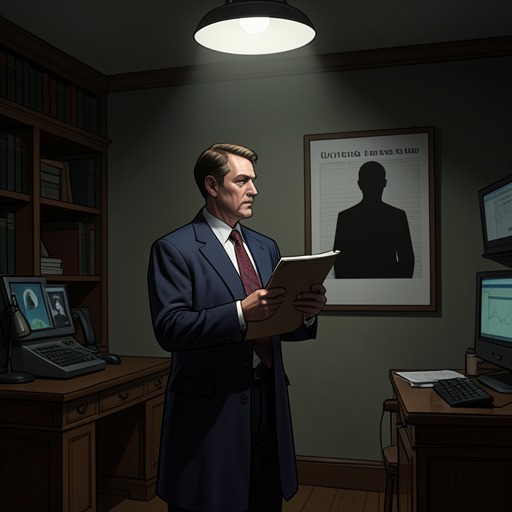
Lyttle first drew public attention as a scholarship athlete at the University, where he excelled in football and basketball. At six feet four or five, broad-shouldered and with a powerful speaking voice, he has a presence that can command a courtroom before he has ruled on anything. His oratory shifts register easily, and his intelligence, theatrical delivery, and ability to read an audience make him an unusually effective advocate.
Before taking the bench, Lyttle practiced law with Horgan. The two defended draft resisters, people accused of marijuana offenses, local Black militants, and paying clients. Rusty Sabich remembers Lyttle as forceful with witnesses and capable of making the jury’s attention settle almost entirely on him. The same gifts later distinguish him as a judge: he is learned, quick to perceive evasion, and difficult for prosecutors to control.
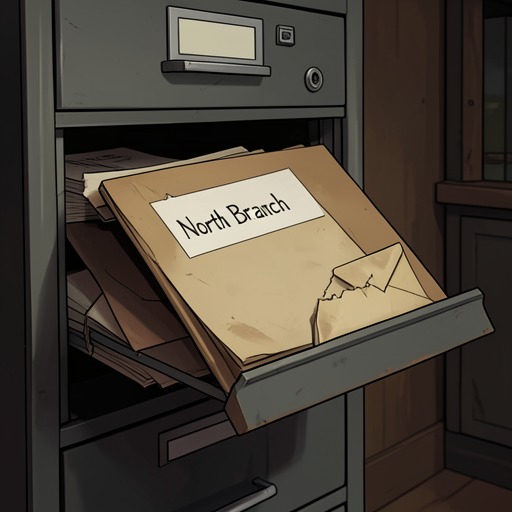
Lyttle is a Black judge whose ease in a formerly whites-only club underscores the changing, but not uncomplicated, social world in which he operates. His political career also reflects that world. When Horgan first sought office, Lyttle managed his campaign and helped bring out substantial Black support. Lyttle later joined Horgan’s ticket as a judicial candidate. Lyttle won while Horgan lost, and the judge paid for his loyalty with years assigned to the North Branch, where he handled traffic cases and minor misdemeanors rather than the felony work for which he had trained.
Politics, Friendship, and the Bench
Lyttle’s connection to Horgan outlasts their formal professional partnership. Horgan’s later endorsement of Mayor Bolcarro’s reelection campaign helped bring Lyttle’s North Branch assignment to an end; Lyttle subsequently became a downtown felony judge. He remained part of Horgan’s close circle and an active presence around his campaigns, although the Code of Judicial Conduct barred him from taking an official campaign role. His political loyalty and judicial office therefore coexist uneasily: he belongs to Horgan’s inner group, but cannot formally act as a campaign operative.
On election night, when television stations project Nico Delia Guardia as the winner over Horgan, Lyttle appears at Horgan’s campaign headquarters with bourbon and complains about the exit polls. His presence places him among those sharing the defeat, not merely an observer of it. The scene also makes clear that his friendship with Horgan is personal as well as political.
On the bench, Lyttle is known for resisting the prosecution’s point of view. His years as a defense lawyer left him impatient with prosecutors and police, while his experience of the arbitrary harms produced by prosecutorial discretion informs his decisions. He and Horgan once argued fiercely in court, then sometimes recessed and reconciled in chambers. This history helps explain why Horgan eventually stopped appearing to argue before him: their courtroom antagonism was inseparable from their private friendship.
The Sabich Trial
Lyttle receives Rusty Sabich’s case after the trial judge is selected by a public random draw. The clerk draws Lyttle’s name, and the assignment surprises the prosecution: he is Horgan’s old partner and, in the defense’s view, an especially favorable judge. At the first status hearing, Lyttle rejects Nico Delia Guardia’s effort to defer the case while the prosecution develops further evidence. He orders a trial three weeks away, reasoning that a defendant charged with a grave crime should not be left under unresolved accusation while the state waits to build its case.
At jury selection, Lyttle explains the case to the prospective jurors and emphasizes the presumption of innocence. His rapport with them is immediate. The defense benefits from his ability to make a fundamental legal principle feel concrete: jurors, he suggests, should begin by treating Sabich as innocent rather than quietly assuming guilt. His courtroom skill is thus not limited to rulings; he can shape how the jury understands its responsibility.
The missing glass becomes a test of Lyttle’s judgment. He recognizes the defense’s objection that it has not been able to examine the physical exhibit, and he criticizes the police evidence room’s longstanding failures in tracking and handling evidence. Nevertheless, he allows testimony about the glass, citing its importance to the prosecution’s case. He records reservations about the ruling, acknowledges the possibility of bad faith without finding it established, and plans a strong limiting instruction for the jury. His decision balances the prosecution’s need to present its case against the defense’s legitimate concern that a central object is unavailable for inspection.
That balance shifts as the trial proceeds. When the prosecution seeks to call Tommy Molto, Lyttle recalls that the prosecution had previously represented Molto would not testify. He also points to the missing glass, last seen with Molto, and to testimony that he considers capable of being understood as manufactured. Lyttle refuses to let Molto take the stand, warning that doing so would compound the damage to the case. His scrutiny is not simply hostility toward the prosecution: it focuses on changing accounts, the handling of evidence, and the fairness of allowing the trial to continue on that record.
Ruling and Significance
After reflecting on the case, Lyttle grants a judgment of acquittal rather than leaving the decision to the jury. He says the evidence is inadequate for a fair deliberation: it does not establish motive, does not concretely establish an intimate relationship, and, after the problems raised at trial, does not effectively prove that Sabich had sexual relations with Carolyn Polhemus on the night she died. Nor is there direct proof that Sabich murdered her. Lyttle accepts that the state may be entitled to an inference placing Sabich at the scene, but concludes that suspicion and inference cannot sustain the prosecution as presented. Sabich’s trial ends, and Lyttle releases him from the case.
The ruling brings together Lyttle’s strongest judicial commitments and the tensions in his character. He has a reputation for favoring the defense and for treating prosecutors as adversaries, but his final decision rests on the insufficiency and compromised handling of the evidence, not on a declaration of who committed the murder. His confidence that the jury would likely acquit does not persuade him to let the trial run its course; he regards continued exposure to an inadequately supported charge as unfair in itself.
After the acquittal, Alejandro Stern offers Sabich an account of Lyttle’s earlier decline. Stern links it to the judge’s divorce, excessive drinking and gambling, a relationship with Carolyn Polhemus, the loss of his prominent legal practice, and his years confined to North Branch. Stern describes that courthouse as a place where corruption reached across bondsmen, police, probation officers, and lawyers, and asks whether Lyttle was the first judge there to succumb. This is Stern’s explanation, not a verdict delivered by the court. It complicates Lyttle’s image as the principled judge who ends Sabich’s prosecution: he is both a forceful guardian of procedural fairness and a man whose past is bound to an institution where public justice could be compromised. The narrative leaves those truths side by side rather than resolving them into a simple portrait of either hero or villain.